
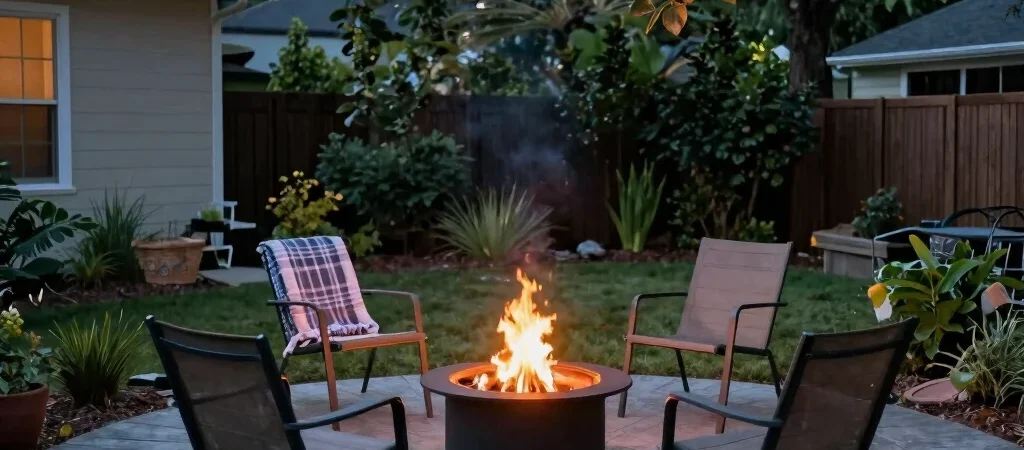
A fire pit can turn a plain patch of backyard into a place people gather, but its footprint reaches beyond the bowl or burner. Seating, safe clearance, and a route through the yard all matter, especially when the space also needs to work for everyday use.
Start with rules and clearances
Check local fire restrictions, building requirements, and any rules from your landlord or homeowners association before comparing products. Set the pit on a stable, appropriate surface and follow the manufacturer's clearance guidance for structures, branches, furniture, and other nearby materials.
In a small yard, a portable model may be easier to put away when the season changes, while a permanent built-in feature needs a deliberate location and more planning. Neither option makes sense if it blocks a gate, sits too close to the house, or leaves no comfortable place to gather.
Match fuel to your routine
Wood-burning pits offer the crackle and scent many people associate with an evening fire, but they also involve ash, smoke, and storing dry fuel. Gas models can be easier to start and tend, though they require a suitable fuel connection or cylinder setup and still need to be used according to the product instructions.
Think about who will use the yard and how often. A simple steel bowl may suit occasional gatherings on a budget, while a more considered patio layout might call for a built-in surround and matching seating; price alone does not determine which arrangement is safer or more comfortable.
Design the gathering space
Arrange chairs so guests can talk without crowding the fire, and leave a clear path back to the house. Gravel, paving, or another suitable noncombustible surface can define the area visually, while outdoor cushions and a basket for blankets make the space useful after the fire is out.
Product links in this article may earn Albatross Aesthetics a commission. Before choosing a model, compare dimensions, fuel requirements, maintenance, and the maker's safety instructions, then confirm that the setup complies with the rules where you live.